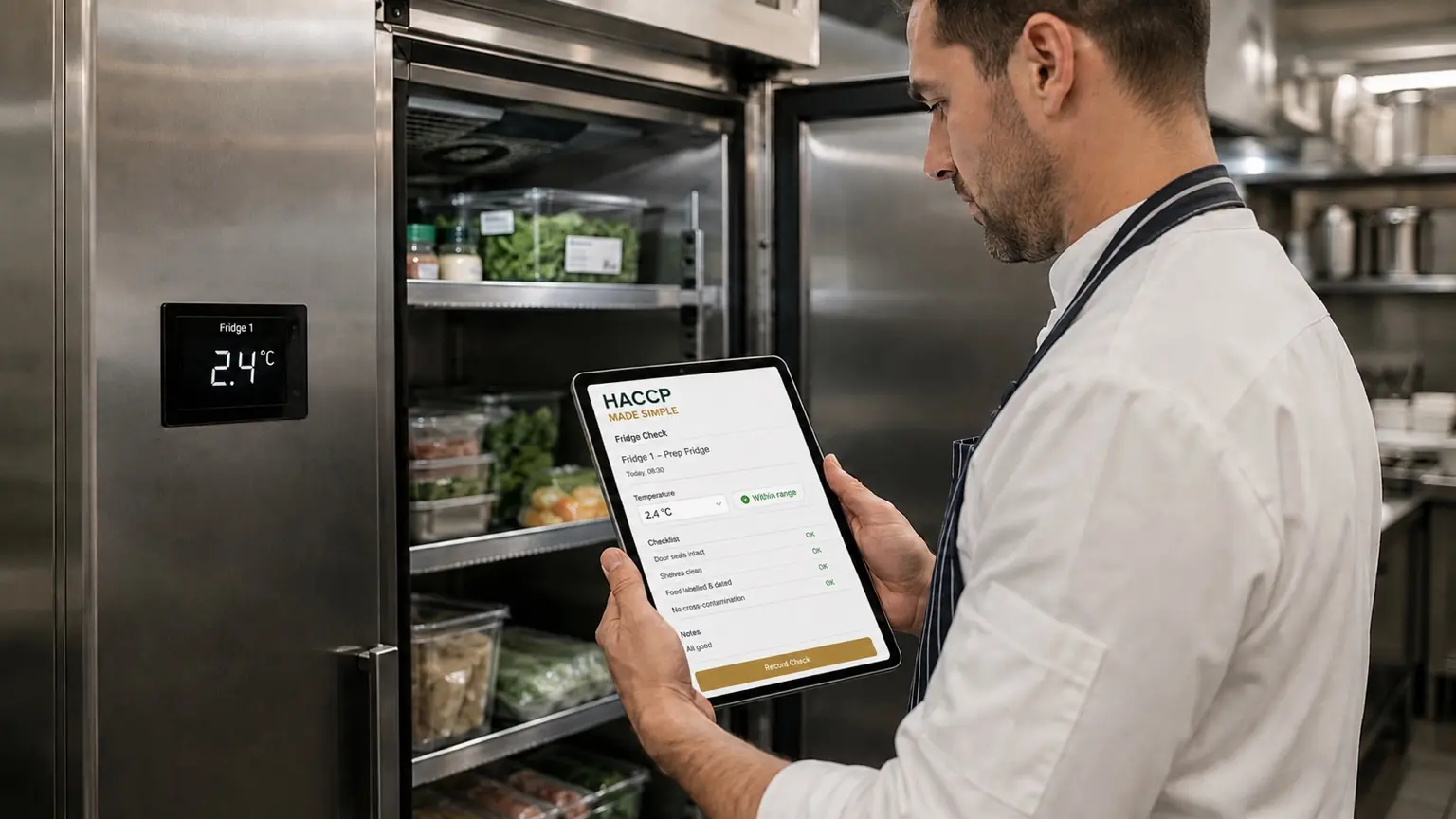
What is a food safety management system and what should it contain?
A food safety management system is the written structure behind safe day-to-day operation. It sets out the procedures, checks, rules and records a food business uses to control food-safety hazards.

The system behind the records
It defines how the kitchen controls food safety.
A working FSMS describes what the business does, which hazards matter, how they are controlled, what staff must check and what happens when a control is not met. It should reflect the actual operation rather than a generic folder kept for inspection.
What it should contain
The parts need to work together.
The exact scope depends on the business, but these areas commonly form part of a hospitality food safety management system.
HACCP-based procedures
Hazards, controls, critical limits where applicable, monitoring, corrective action, verification and records.
Cleaning and hygiene
The routines, responsibilities and checks that keep the premises and equipment under control.
Temperature controls
Controls for storage, cooking, cooling, reheating or hot holding where they apply to the operation.
Allergen controls
Current ingredient and product information, controlled changes and staff knowing where to check.
Training and competence
Clear responsibilities and enough instruction, supervision and competence for the work being done.
Records and review
Evidence of checks, failures, actions and management verification—not paperwork detached from the operation.
Configured to the site
The same template does not fit every kitchen.
A restaurant cooking and cooling food, a pub using hot holding and a café serving a simpler menu will not need an identical set of controls. The system needs to match the premises, menu, equipment, suppliers, processes and responsibilities.
Software can organise and evidence the system, but the food business operator remains responsible for correct configuration, competent staff, genuine records and food-safety decisions.