What food safety records should a hospitality business keep?
Useful records show that the controls in the food safety management system were carried out in the real operation. The right record set depends on the food, equipment, processes and risks at the site.

Record what matters
The record set should follow the operation.
A business should be able to show how its food-safety procedures are being followed. That does not mean collecting every possible form. It means keeping the records needed to evidence the controls that genuinely apply.
Operational examples
Common record areas in hospitality.
Not every item applies to every business. The site’s menu, processes, equipment and documented controls determine the appropriate set.
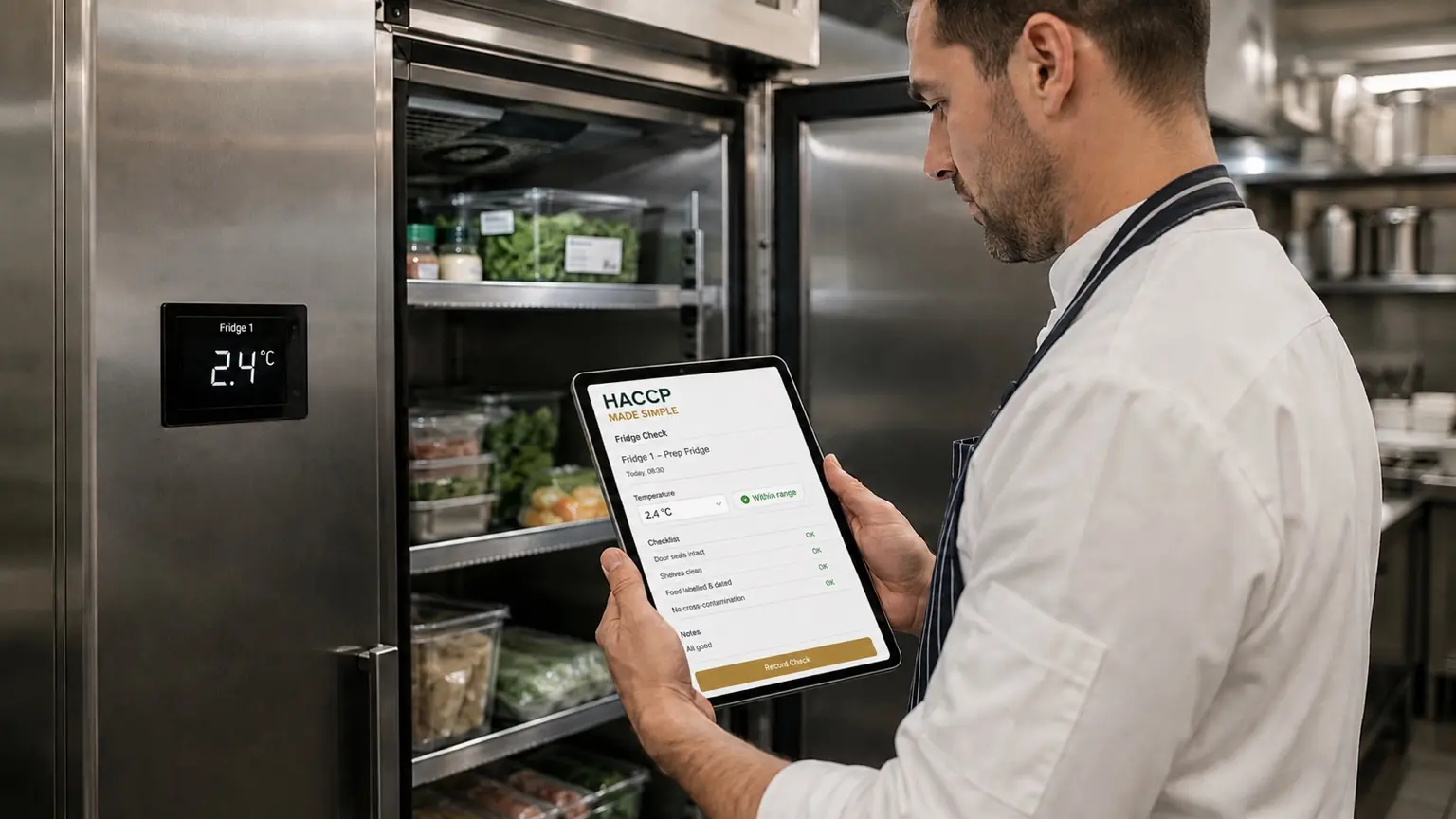
Refrigeration
Checks for the fridges and freezers used at the site, with action recorded when a unit is out of control.
Cooking and reheating
Batch or process records where these controls apply to the food being prepared.
Cooling and hot holding
Records matched to the process, equipment and limits used by the operation.
Deliveries
Supplier, condition, temperature or rejection evidence where relevant at receipt.
Cleaning
Scheduled work, completion and action where a hygiene control is missed or ineffective.
Probe checks
Calibration or accuracy checks at the frequency defined by the site system.
Allergens
Current recipes, specifications, change control and other evidence supporting accurate information.
Training and competence
What instruction or training was completed, by whom and when competence was checked.
Corrective actions
The failure, immediate response, food or equipment decision, person responsible and close-out.
Verification and review
Evidence that managers checked records, followed up recurring issues and reviewed the FSMS.
When something fails
The action belongs with the original record.
A temperature log showing an out-of-limit result is incomplete if it cannot show how the food and equipment were assessed, what action was taken and whether the issue was reviewed.
There is no single universal record list or retention period stated here. The business must follow the requirements, guidance and documented procedures that apply to its operation.